You love the serene feel of the George Washington Memorial Parkway and the Potomac views, but the same slopes and stormwater that make Fort Hunt special can be tough on your yard. If you want a low‑maintenance landscape that photographs beautifully and respects local Resource Protection Area rules, you are in the right place. In this guide, you will learn how RPAs work in Fairfax County, how to control erosion with native plantings and bioswales, and which species thrive near the Parkway. You will also get simple design, installation, and care tips that keep your yard stable and picture‑ready. Let’s dive in.
Know your RPA and local rules
If your property sits near tidal water, a stream, or wetlands, part of your lot may be within a Resource Protection Area. In Fairfax County, RPAs are typically managed as a 100‑foot vegetated buffer measured from the edge of persistent open water or tidal wetlands. Within this buffer, vegetation clearing, grading, and new impervious surfaces are limited or require approval and mitigation.
Fort Hunt lots often have back slopes toward the Potomac, small drainage swales, and runoff moving toward the river or parkland. That means even small changes can affect water quality and slope stability. Before you remove trees, cut a new path, add a patio, or grade a swale, contact Fairfax County to confirm RPA boundaries and any permits or mitigation that apply.
Use this quick checklist to know when to call the County:
- You plan to remove or thin trees and shrubs near the water’s edge.
- You want to add hardscape, expand a driveway, or change drainage.
- You expect to disturb more than a modest area of soil. Many Virginia localities trigger Erosion and Sediment Control and Stormwater Management plans above certain land‑disturbance thresholds, commonly around 2,500 square feet. Confirm current thresholds with Fairfax County.
- You are not sure where the 100‑foot buffer or wetlands line falls on your lot.
When in doubt, ask first. Local staff can help you avoid costly rework and steer you toward practices that protect both your property and the Bay.
Stabilize first: the core strategy
The most effective erosion control starts with living roots. A layered planting of trees, shrubs, grasses, and groundcovers slows runoff, holds soil in place, and filters sediment and nutrients before they reach the river.
Keep roots in the ground
- Preserve existing trees and understory wherever possible. Their root systems are irreplaceable.
- Fill gaps with native shrubs and a dense herbaceous layer. A continuous cover is better than scattered plants.
- Avoid extending turfgrass into buffer areas. Turf has shallower roots, needs more maintenance, and can weaken slopes if it replaces deep‑rooted natives.
Direct and slow runoff with bioswales
Bioswales are shallow, vegetated channels that catch and slow stormwater so it can soak into the ground. In Fort Hunt, they work well along contours or at the base of slopes.
- Plant swales with deep‑rooted native grasses, sedges, and forbs that can handle both wet and dry periods.
- On long or steeper runs, include small check dams made of stone or logs to reduce water speed.
- Size and grade swales carefully so they move water without causing concentrated flow that could cut a gully. On steep or complex sites, consult a professional designer.
Protect bare soil during establishment
New plantings take time to knit the soil together. Until roots develop, protect the surface.
- Use biodegradable coir erosion‑control blankets on steep or freshly graded slopes.
- Apply a thin layer of shredded hardwood or leaf mulch to reduce splash erosion. Keep heavy mulch away from the immediate water’s edge.
- Use temporary seeding where needed to hold soil while permanent plants grow.
Practices to avoid near RPAs
- Do not apply heavy fertilizer or broad‑spectrum pesticides in buffer areas.
- Avoid installing new impervious surfaces in the buffer without County guidance and mitigation.
- Skip extensive grading or filling that removes native vegetation or steepens slopes.
Native plant palette for Fort Hunt
Choose species native to Northern Virginia that match your sun, soil, and moisture conditions. Mass plantings and repetition create strong visuals and need less upkeep than busy mixes.
Trees for long‑term stability and canopy
- Red oak (Quercus rubra). Deep roots, strong canopy, seasonal interest.
- Swamp white oak (Quercus bicolor). Thrives in low, occasionally wet areas.
- River birch (Betula nigra). Vigorous roots and striking bark; good near wetter spots.
- Red maple (Acer rubrum). Adaptable to a range of moisture with excellent fall color.
- Eastern redcedar (Juniperus virginiana). Wind and drought tolerant, useful for screening when used judiciously.
Shrubs for structure and slope reinforcement
- Inkberry holly (Ilex glabra). Evergreen and tolerant of wetter soils.
- Northern bayberry (Morella pensylvanica). Handles salt influence, good near the river corridor.
- Buttonbush (Cephalanthus occidentalis). Ideal for wet edges, very pollinator friendly.
- Spicebush (Lindera benzoin). Reliable understory shrub that supports wildlife.
- Smooth hydrangea (Hydrangea arborescens, native types). Shade tolerant with seasonal blooms.
Grasses and sedges that hold soil
- Switchgrass (Panicum virgatum). Deep fibrous roots and year‑round structure.
- Little bluestem (Schizachyrium scoparium). Drought tolerant with attractive seedheads.
- Pennsylvania sedge (Carex pensylvanica). Forms a soft carpet in light shade and dry soil.
- Soft rush (Juncus effusus). Works in consistently wet swales.
- River oats (Chasmanthium latifolium). Tolerates shade, adds movement and texture.
Groundcovers and perennials for coverage and color
- Green‑and‑gold (Chrysogonum virginianum). Low, spreads gently, spring flowers.
- Wild ginger (Asarum canadense). Effective shade groundcover with handsome foliage.
- Foamflower (Tiarella cordifolia). Spring blooms for woodland edges.
- Woodland phlox (Phlox divaricata or P. stolonifera). Spreads in part shade with spring color.
- Asters and goldenrods (Solidago). Late season color and pollinator support.
Plants to avoid in buffers and on slopes
Skip invasive or aggressive exotics that can escape and damage slopes over time: English ivy, Japanese honeysuckle, wintercreeper, and non‑native euonymus.
Swales and slope layouts that work
Thoughtful layout makes native plantings both effective and easy to maintain. Start with a simple plan to guide placement and grading.
Map existing conditions. Note lot lines, RPA limits if present, topography, wet spots, and where water flows during storms. Preserve healthy trees and patches of native vegetation.
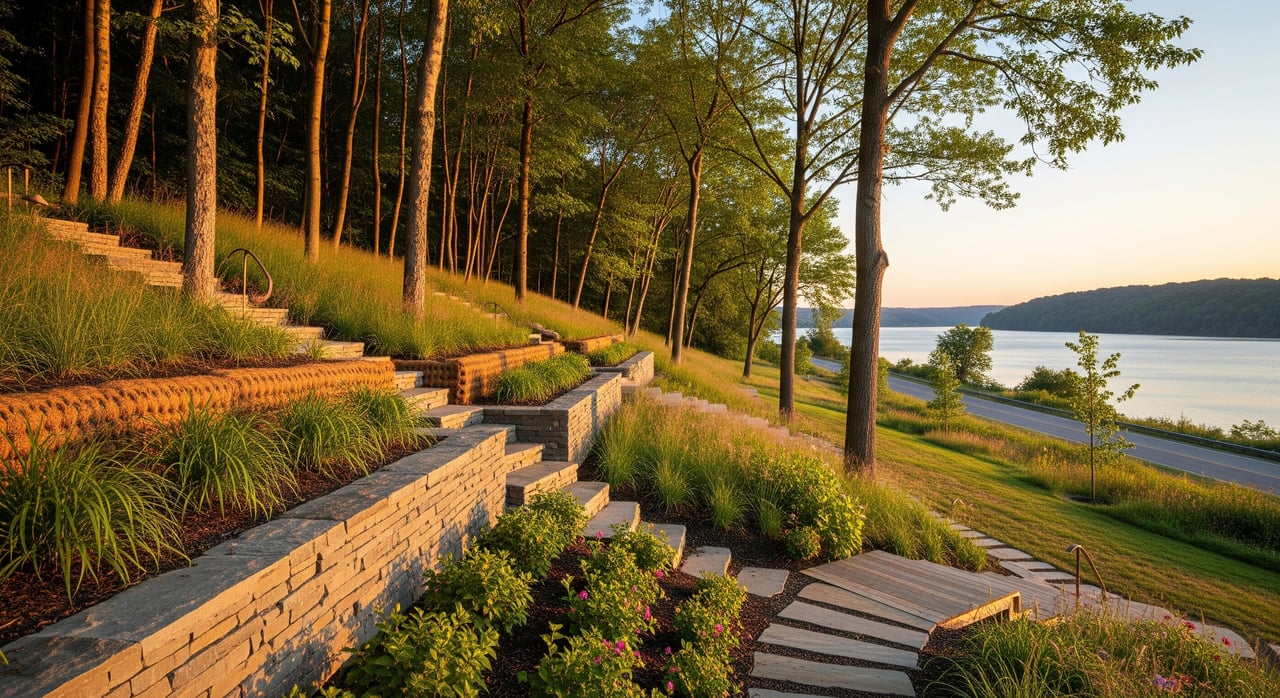
Break up long slopes. Use staggered rows of shrubs, small terraces, or graded benches to reduce runoff speed and create pockets where water can sink in.
Align bioswales with the land. Place swales along contour lines so they catch sheet flow, not concentrate it. Include check dams every so often on longer runs.
Manage outlets carefully. Where a swale empties, use dense plantings or a small rock apron to prevent scour. Avoid sending water straight down a bare slope.
Call in a pro for complex grades. If your yard has steep sections, multiple outfalls, or signs of active erosion, bring in a licensed contractor or designer familiar with riparian buffers.
Installation and maintenance made simple
A few smart moves up front set you up for a low‑effort landscape that looks good in every season.
Smart installation steps
- Plant in fall if possible. Cooler temperatures and seasonal moisture help roots establish before summer heat.
- Disturb soil as little as possible in buffer areas. Avoid importing topsoil that may carry weeds. Use light amendments only where needed.
- Add erosion‑control blankets on fresh slopes and keep mulch layers thin. Mulch enough to protect soil, not smother new plants.
- Group plants by water and light needs. Put moisture lovers in swales or low spots and drought‑tolerant species on higher banks.
Low‑effort maintenance timeline
- First 1 to 3 years: Water during extended dry spells, especially the first season. Watch for erosion after heavy rain, replace any failed plants, and remove invasives by hand.
- After establishment: Expect limited pruning, little to no fertilizer, and no mowing inside the buffer. If a soil test suggests a nutrient need, use a phosphorus‑free product and follow label guidance.
- After storms: Check swales and slopes for rills or scour. Repair with live stakes, extra plants, or small check dams where needed.
- Pest management: Use integrated pest management and avoid broadcast herbicides in the buffer.
Make it picture‑ready
You can have a Bay‑friendly buffer that also shines in photos. Focus on simple structure, seasonal variety, and strong repetition.
- Use bold masses. Plant broad drifts of a couple of grasses with one or two flowering perennials. This reads well from a distance and needs less care.
- Layer for depth. Combine a groundcover foreground, a mid layer of shrubs, and a backdrop of trees to create a clean, natural frame.
- Choose four‑season interest. Pair fall color from oaks and red maple with winter structure from river birch and the upright form of switchgrass. Add spring layers like woodland phlox for early color.
- Consider microclimates. Northern exposures stay cooler and shadier, while south and west slopes run hotter and drier. Near the river, occasional salt influence may favor tolerant species like northern bayberry.
Getting help without headaches
Projects in or near RPAs benefit from early coordination. Start by confirming your RPA status and any permits or mitigation needed with Fairfax County. For significant grading or swale construction, hire a licensed contractor with riparian buffer experience. Native plant availability changes by season, so work with local nurseries when possible.
If you are preparing to sell or simply want your yard to look its best with less effort, our team can help you prioritize high‑impact updates that protect your property and appeal to buyers. From vetted contractor introductions to project coordination and listing preparation, The Seward Group provides a concierge approach so you can move forward with confidence. Ready to talk through options that fit your lot and goals? Contact The Seward Group to Schedule a Concierge Consultation.
FAQs
What is an RPA near the Potomac in Fort Hunt?
- A Resource Protection Area is typically a 100‑foot vegetated buffer adjacent to tidal waters, streams, or certain wetlands. Within this buffer, clearing, grading, and new impervious surfaces are restricted or require County review and mitigation.
Do I need a permit to add a bioswale on an RPA lot?
- If your swale is within the designated RPA or changes drainage patterns, you should contact Fairfax County first. The County will confirm if permits or mitigation are required based on location and disturbance area.
Which native grasses control erosion on sunny Fort Hunt slopes?
- Switchgrass, little bluestem, and river oats offer deep, fibrous roots and strong visual presence. Use mass plantings for better coverage and easier maintenance.
How do I handle street runoff near the Parkway on my property?
- Capture and slow water with a vegetated bioswale placed along the contour. Add check dams on long runs and stabilize outlets with dense plantings or small rock aprons to prevent scour.
When is the best time to plant natives in Northern Virginia?
- Fall planting gives roots time to establish in cooler weather and seasonal moisture, which supports better survival and lower maintenance the following summer.
Is turfgrass a good choice inside an RPA buffer?
- Turf has shallow roots and higher maintenance needs. In buffers, deep‑rooted native grasses, sedges, shrubs, and trees provide better stability, infiltration, and water quality benefits.