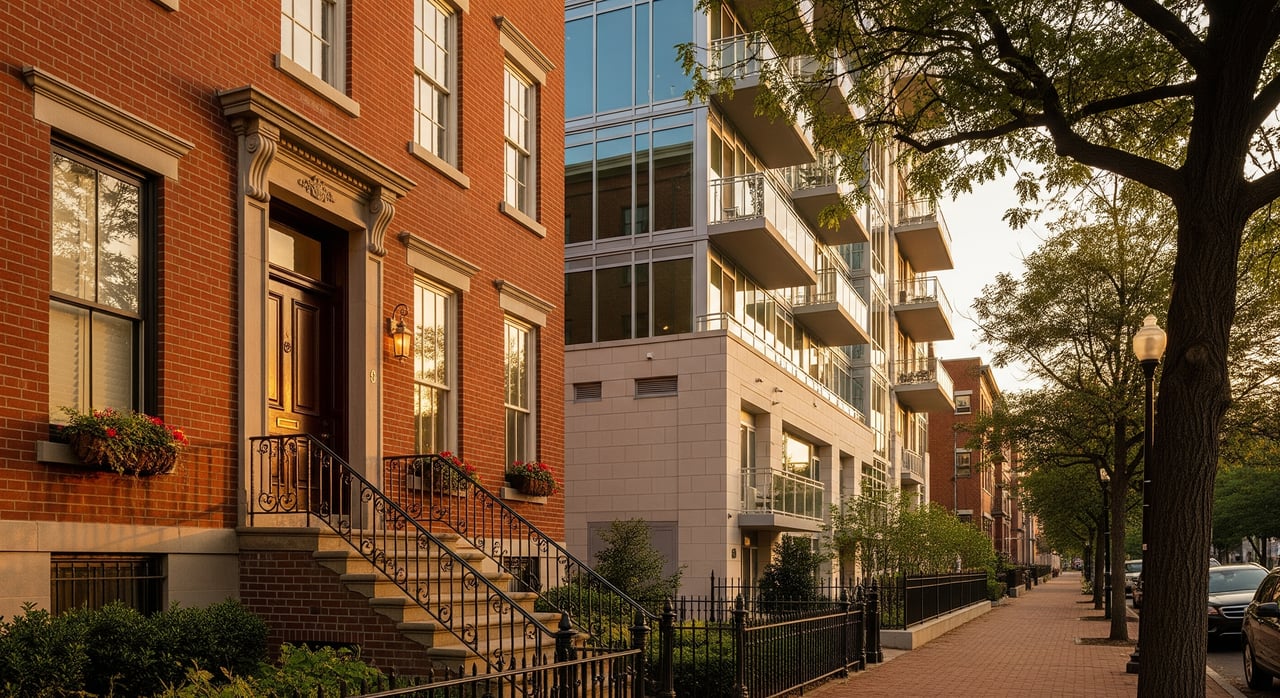
Choosing Between an Arlington Townhome vs Condo
January 15, 2026
January 15, 2026
Trying to choose between a townhome and a condo in Arlington? You are not alone. With busy workweeks and packed weekends, you want the right mix of space, convenience, and predictable costs. In this guide, you will learn how ownership works, what monthly costs to expect, how parking and transit play in, and which lifestyle each option tends to fit best. You will also get a short checklist to help you decide with confidence. Let’s dive in.
A condo gives you ownership of your interior unit plus a shared interest in common areas like the roof, exterior walls, elevators, lobby, and grounds. A homeowners association, or association, manages those shared elements. In Arlington, some “townhomes” are legally condos, while others are fee simple. A fee-simple townhome means you own the dwelling and the land under it, including the exterior.
Always confirm the legal form before you fall in love. Your agent can review the deed and association documents to tell you if a townhome is fee simple or a condo form. The difference affects maintenance, insurance, and financing.
In a typical condo, you handle your interior finishes and systems, and the association maintains exterior elements and common systems. In a fee-simple townhome, you are responsible for both the interior and exterior, including the roof and yard. Associations can vary, so check the bylaws and budget to see what is covered. For a deeper primer on association roles, review the Community Associations Institute’s guidance at the CAI website (CAI).
Condo owners usually carry HO-6 “walls-in” insurance for interiors and personal property. The association holds a master policy for the building. Fee-simple townhome owners typically carry a standard homeowners policy, often HO-3, that covers the structure and contents. Your insurance agent can price both quickly. You can learn more about policy types at the Insurance Information Institute (III).
In Arlington and similar urban markets, fee-simple townhomes with private land and garages often sell higher per unit than many mid-rise condos. That said, condos near Metro or in prime corridors like Rosslyn, Courthouse, Clarendon, Ballston, and Pentagon City can match or exceed townhome prices, especially with newer finishes and amenities. For current trends, check regional market reports from the Northern Virginia Association of Realtors (NVAR).
Condo HOA fees are typically higher because they fund exterior maintenance, building insurance, reserves, and amenities like elevators, gyms, or concierge services. Townhome communities may have lower monthly dues if the association covers only limited items like landscaping or snow removal. Plan for special assessments, which can occur if reserves are not adequate for major repairs. Review the budget, reserve study, and meeting minutes to understand the association’s health. The CAI site offers helpful context on reserve studies and good governance (CAI).
Arlington County taxes are based on assessed value, no matter the property type. The legal form does not change your tax obligation. You can explore how assessments work through Arlington County’s official site (Arlington County). For insurance, expect HO-6 plus HOA dues for condos, and a broader homeowners policy for fee-simple townhomes. Your long-term costs will depend on the property’s age, association reserves, and how much maintenance you prefer to outsource.
Financing for condos can involve extra steps. Many lenders need the condo project to meet eligibility standards for FHA, VA, and some conventional loans. Before you assume a loan program will work, confirm project eligibility. You can review FHA condo approval basics on HUD’s site (HUD) and conventional project standards at Fannie Mae (Fannie Mae). Fee-simple townhomes usually qualify like single-family attached homes and may be simpler for FHA or VA underwriting since there is no project-level approval.
If you prefer to spend weekends enjoying Arlington’s dining and parks instead of yard work or roof repairs, a condo’s outsourced maintenance can be a strong fit. You trade a monthly HOA fee for predictability and convenience. If you like more control, prefer a small yard, or want flexibility for exterior projects, a fee-simple townhome can deliver that freedom, with the understanding that you will budget for upkeep over time.
In Metro-adjacent neighborhoods, condo parking can be limited, assigned, or available for a fee. Street parking may require a Residential Parking Permit depending on the block. Review Arlington County’s parking programs to understand permit options and guest parking rules (Arlington County). Townhomes more often include a private garage or driveway, which simplifies car ownership and guest parking.
Arlington is built for transit, biking, and walking. Condos cluster near Metro stations and commercial corridors, which means easier walks to coffee, fitness, and dinner, plus shorter rides into D.C. You can explore regional rail and bus routes through WMATA (WMATA). Some townhome communities sit a bit farther from stations and lean on bus routes, biking, or short drives to Metro. If walkability is critical, compare neighborhoods using tools like Walk Score (Walk Score).
Mid and high-rise condos can bring more neighbors and shared walls or ceilings, which some buyers find lively and others find noisy. Townhomes, especially with private entrances and multi-level layouts, often feel more private and home-like. Think about how you live. If you host friends often or want a small yard for a pet, a townhome can be compelling. If you value a staffed lobby, package handling, and building security, a condo may be ideal.
Association rules matter. Bylaws often govern pet types and sizes, leasing caps, and renovation approvals. Some communities limit short-term rentals. If you plan to rent your unit in the future, verify rental policies and any local regulations before you write an offer. Ask for the most recent bylaws, house rules, and any amendments.
Use this to narrow your fit in minutes:
Commute and transit
Budget and monthly costs
Financing and flexibility
Maintenance and lifestyle
Association health and rules
Parking and permits
Inspection and insurance
Neighborhood test
Choosing between a townhome and a condo in Arlington comes down to your budget, commute, and how much maintenance you want on your plate. A focused strategy will save you time and help you avoid costly surprises in HOA rules or building reserves. Our team pairs hyperlocal market insight with a streamlined search, association document review, and lender coordination so you can move forward with clarity.
When you are ready to compare specific buildings and townhome communities, connect with Lyssa Seward to Schedule a Concierge Consultation. We will map your must-haves to the right neighborhoods, vet HOA health, and line up a clean path to closing.
Stay up to date on the latest real estate trends.



Have questions about Alexandria real estate? Looking to buy or sell a home? Contact The Seward Group today! Our friendly team is ready to provide all the information and support you need. Call, email, or drop by our office to start your journey with us