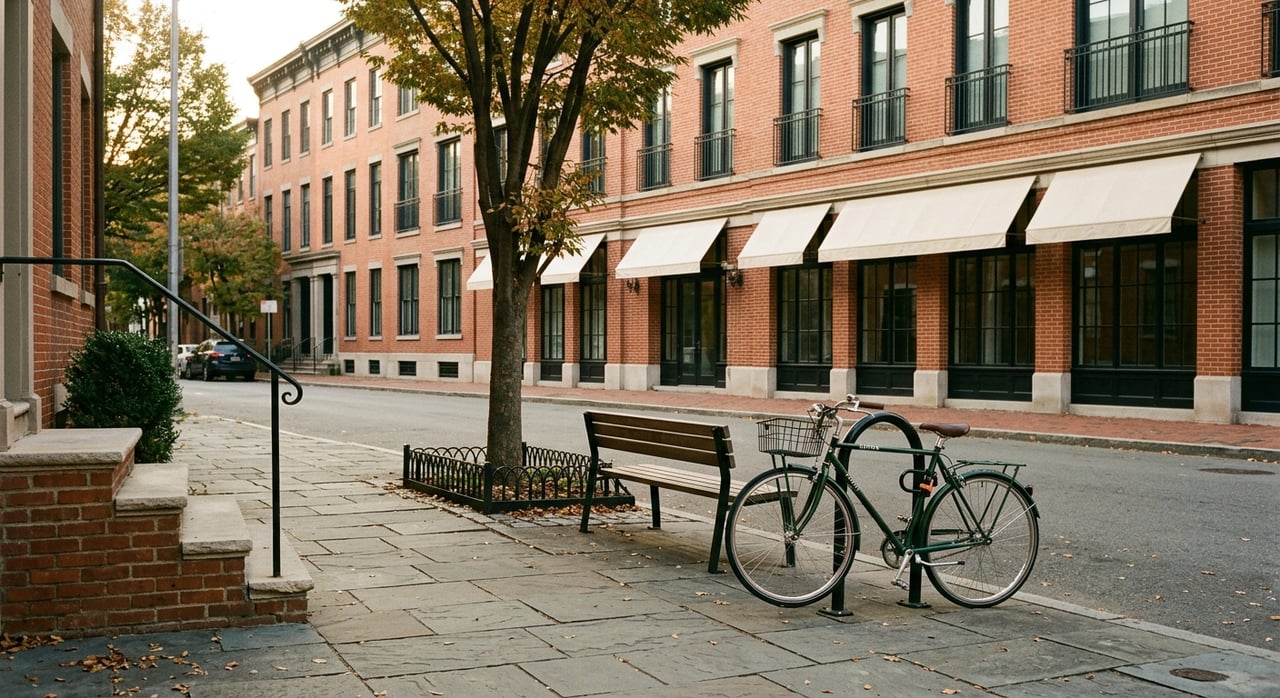
Living in Arlington VA: Which Urban Village Fits You?
June 25, 2026
June 25, 2026
Wondering whether Arlington feels more like a city, a suburb, or something in between? The honest answer is that it can feel like all three, depending on where you land. If you are relocating, upsizing, downsizing, or just trying to find the right lifestyle fit, Arlington’s urban villages offer a useful way to understand your options. Let’s dive in.
Arlington is built around a planning approach that is very different from a one-size-fits-all suburb. According to Arlington County, the county uses smart-growth and urban-design principles to shape 12 urban villages, each with its own character and each supported by housing, jobs, recreation, and access to public transportation.
That matters when you are choosing where to live. Instead of one giant downtown and one broad ring of neighborhoods, Arlington gives you a network of distinct centers that connect easily to one another. In practical terms, that means your day-to-day experience can vary a lot from one village to the next.
The county’s planning goal is also important to understand. Arlington says it aims to balance new development with preservation of residential areas and the environment. So while some areas feel highly urban and active, others transition more gently into townhouses and single-family neighborhoods.
Living in one of Arlington’s urban villages often means convenience is part of your routine, not a special occasion. Arlington County says the county covers just 25.8 square miles and includes 11 WMATA Metrorail stations, which helps explain why so many residents build their lives around shorter trips and multiple transportation choices.
If you prefer to drive less, Arlington gives you several ways to do that. Arlington Transit connects neighborhoods to Metrorail and Virginia Railway Express, while county-supported walking and biking programs help make car-light travel more practical. For many people, that translates into easier commutes, more flexibility, and less time spent planning every errand around a car.
Outdoor access is another big part of the experience. Arlington highlights parks, nature centers, dog parks, community and fitness centers, pools, spraygrounds, and nearly 49 miles of paved multi-use trails. In many urban villages, green space and recreation are part of everyday living, not something you have to drive across town to enjoy.
If you are comparing Arlington’s urban villages, one theme tends to show up again and again: the closer you are to major transit and mixed-use activity, the more urban the environment tends to feel. That often means taller buildings, more shops and services nearby, and more activity throughout the day.
As you move farther from those cores, the feel often shifts. Buildings usually step down in height, streets may feel less intense, and you are more likely to see a stronger residential edge with townhomes or single-family homes nearby. Neither option is better across the board. It just depends on how you want your home to support your routine.
A simple way to think about it is this:
Rosslyn is Arlington’s most vertical urban village. The county describes it as a gateway to Arlington and Virginia, with towering office buildings, condominiums, high-rise apartments, and smaller buildings mixed in.
What does that feel like on the ground? Rosslyn tends to read as the most city-like part of Arlington. If you like a dramatic skyline, a strong business-center feel, and close access to regional transit connections, Rosslyn can feel especially convenient and energetic.
For some buyers, that is exactly the draw. For others, it may feel more urban than they want for everyday life. This is where your priorities matter most.
Clarendon is one of the clearest examples of Arlington’s urban village concept in action. Its Metro station area covers about 212 acres and includes single-family homes, apartments, condos, office buildings, and both local and national stores.
Its core is intentionally compact, centered around a one-block area that includes the Olmstead Building and Clarendon Metro Park. County planning goals focus on walkable streets, safe crossings, and accessible public spaces, which helps explain why Clarendon often feels easy to navigate on foot.
If you are looking for a place with a lively core and residential options around the edges, Clarendon often checks that box. It can give you an active, mixed-use environment without the same skyline effect you see in Rosslyn.
Ballston is often described as Arlington’s “new downtown,” and that framing fits. The area covers roughly 260 acres and includes commercial, office, and residential properties, with density concentrated around the Metro station and tapering toward nearby single-family neighborhoods.
For residents, that can create a practical mix. You get the benefits of a denser center, such as transit access and a stronger commercial presence, while still seeing a clear transition into quieter residential blocks as you move outward.
Ballston often appeals to people who want an urban setup that still feels structured and easy to understand. If you like the idea of a defined center with a residential gradient, this part of Arlington may stand out.
Crystal City and Pentagon City are part of a corridor the county says is being transformed into a more inviting, lively, and walkable community. Current plans emphasize more ground-floor retail, improved office space, more housing options, upgraded open space, improved streets and sidewalks, and increased transit options.
The framework also points to parks and plazas, an integrated transit network, a balanced mix of uses, and future street improvements. For you as a resident, that means this area is designed to support a full daily rhythm, not just one type of use.
This corridor tends to feel among Arlington’s most urban environments. If you value connectivity, mixed-use energy, and a setting shaped around movement and convenience, Crystal City and Pentagon City are worth a close look.
Shirlington offers a very different flavor of urban village life. Arlington describes it as the county’s arts-and-entertainment hub, with townhouse communities, high-rise apartments, a pedestrian promenade, cafes, restaurants, shops, parks, a dog park, a cinema, and a public library.
It is also linked by trails and bus service, which helps connect it to the rest of Arlington. The result is a place that feels active and walkable, but often on a more neighborhood-scaled level than the most Metro-centered villages.
If you want a lively daily experience without a high-rise skyline dominating the setting, Shirlington may feel like a strong middle ground. It often appeals to people who want local activity, public amenities, and an easy sense of place.
Columbia Pike is often described by the county as Arlington’s “Main Street,” and that phrase helps capture its identity. The area features a blend of housing, local shops, and culturally diverse restaurants, with planning focused on affordable housing, improved transit, more urban parks, and a safer environment for biking and walking.
The county’s form-based code approach is designed to encourage mixed-use development, plazas, retail shops, sidewalk cafes, street trees, and a variety of housing. That planning direction helps shape a more neighborhood-scaled, main-street-style experience.
For many people, Columbia Pike feels less like a polished urban core and more like an evolving corridor with personality and local texture. If that is what you want, it can be a compelling option.
One of the biggest misconceptions about Arlington is that it is either all city or all suburb. In reality, the county’s urban village model creates a patchwork of experiences that are tied together by transit, planning, and public spaces.
That is helpful when you are moving to the area because it gives you real choices. You can prioritize proximity to Metro, a certain kind of streetscape, easier access to trails and parks, or a housing type that fits your next season of life. Arlington is not one uniform answer. It is a menu of lifestyle patterns.
If you are trying to narrow your search, focus less on labels and more on how you want your week to work. The right fit often becomes clearer when you think about your routine, your housing preferences, and how much activity you want right outside your door.
Here are a few questions worth asking:
A thoughtful home search in Arlington is often about matching your lifestyle to the right village pattern. When you do that well, the county starts to make much more sense.
If you are exploring Arlington and want help comparing neighborhoods, commute patterns, or housing options, Lyssa Seward can help you find the right fit with clear, local guidance and a concierge-level approach.
Stay up to date on the latest real estate trends.
Have questions about Alexandria real estate? Looking to buy or sell a home? Contact The Seward Group today! Our friendly team is ready to provide all the information and support you need. Call, email, or drop by our office to start your journey with us